Rewarding Our Team as BioRender Hits $900M Valuation
This is some text inside of a div block.
Business
Rewarding Our Team as BioRender Hits $900M Valuation
.png)
%20(3).png)
One of the hardest parts of building a company is the time it takes for the people doing the work to see the value they’ve created. At BioRender, we believe the scientists, designers, engineers, and operators who build our platform should be able to share in that value - on a timeline that works for them.
Today, we’re announcing a new investment from Dimension Capital valuing BioRender at $900 million. As part of this transaction, we offered more than 100 employees the opportunity to realize liquidity from their vested equity. This milestone reflects something core to our values: BioRender exists because of the people who built it, and we believe they deserve to benefit from the impact they’ve made.
We’re also incredibly excited to partner with the team at Dimension Capital, one of the premier biotech investors in the world, whose belief in BioRender and strong alignment with our mission make this a truly unique partnership.
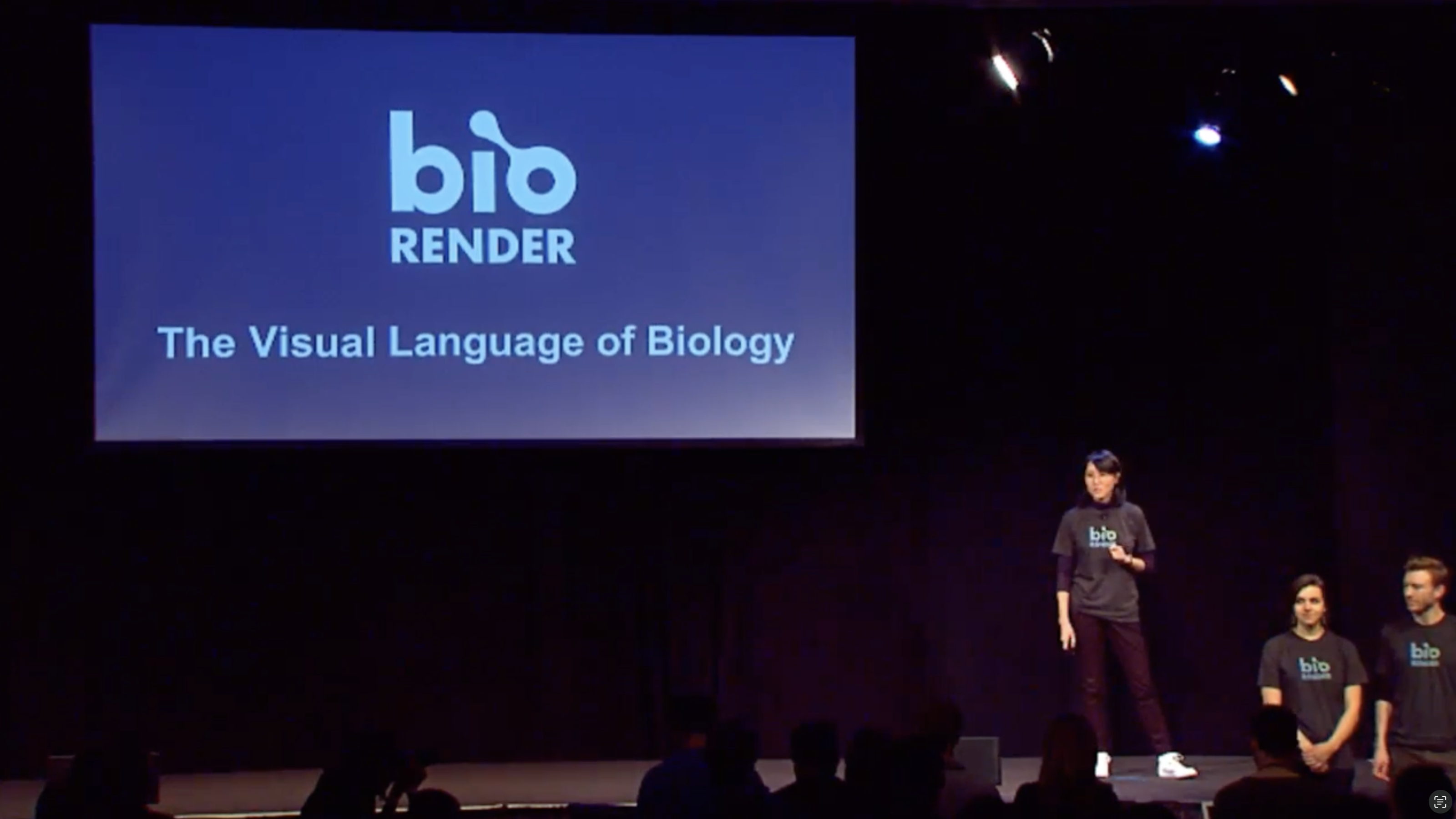
When we started BioRender in 2017, most people were skeptical that biology could have a shared visual language – there was a perception that biology is too complex, fragmented and subjective to truly be captured in one standard. But that’s what we set our sights on, and put a stake in the ground with our Y Combinator pitch deck, opening with a simple line: “BioRender: The Visual Language of Biology.”
Over the past eight years, our vision hasn’t changed. Today, more than 4 million researchers worldwide use BioRender, including Nobel laureates, leading academic labs, and nearly every major biopharma company. More than 500,000 researchers use BioRender every month, triple what we saw just three years ago. This week, Forbes described BioRender as a “Visual Language of Science.”
Researchers have used our library of 50,000+ scientifically vetted icons - the largest of its kind in the world - to create more than 25 million scientific figures. We’ve expanded from a figure-making tool into an AI-powered platform for graphing, presentations, posters, and collaborative white-boarding. And we’ve been profitable since our first quarter.
But metrics only tell part of the story. The real measure of success is how deeply BioRender is embedded in how science is actually conducted. When a PhD student creates their first poster, when a pharma team aligns on a mechanism of action, when a PI drafts a grant or a leadership team prepares for a critical decision, BioRender is there.
AI is rapidly changing how science is discovered and communicated, but today’s models don’t have a standardized visual language for life sciences. That’s a problem, because in science, visual inaccuracies can lead to real misunderstandings. While chemistry has the periodic table and physics has universal equations and units, biology lacks a single source of truth. There’s no shared standard for how to depict a cancer cell, a signaling pathway, or even an organ like the heart. In many ways, emojis are more regulated than biological imagery.
We aim to change that. Researchers can now access AI tools directly within BioRender to generate new figures, charts, and images as quickly as they can think of them. And starting this week, BioRender is now OpenAI’s trusted source for accurate science visuals, joining our existing partnership with Anthropic’s Claude for Life Sciences. These new features and collaborations allow researchers to access our vetted and verified illustrations, so that as AI accelerates discovery, it doesn’t compromise trust.

If you want to shape the frontier of science, AI, and design, we’d love to hear from you. BioRender is hiring across engineering, data & AI operations, finance, marketing, sales, and more.
As a profitable company, BioRender was able to offer liquidity to over 100 employees from their vested equity. This milestone reflects a core belief: the people who built BioRender deserve to benefit from the impact they’ve created.


